LoRaWAN explained
What is LoRaWAN and how does it work?
Understand sensors, gateways and network servers, and where LoRaWAN fits when you need to deploy telemetry with less field cabling.
Vista Tech ·
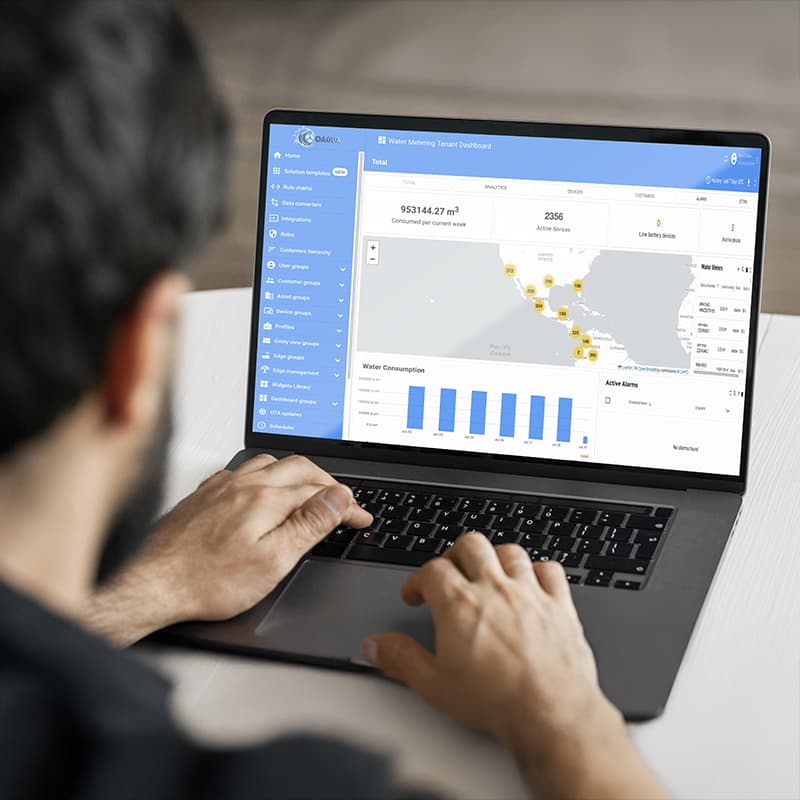
A temperature reading in a warehouse, a water-meter value and a battery status report have something in common: each can be a small message. LoRaWAN connects devices that exchange these kinds of messages over a low-power wide-area network. It is a useful starting point for telemetry, provided the application can tolerate its communication limits.
From the sensor to the operational screen
LoRa is the radio technology; LoRaWAN defines the networking protocol and architecture around it. A device sends a radio message that one or more gateways can receive. The gateway forwards traffic over an IP connection to a network server; application services decode the payload and present the measurement. A gateway therefore needs suitable backhaul as well as radio coverage. The network server manages network functions, while the application turns the data into something a person or system can use.
Why deployment can require less field cabling
Battery-powered sensors can reduce the need to run power and data cables to every measurement point. That can simplify an initial installation in an existing facility. It does not remove the work of choosing sensors, checking the regional frequency plan, providing gateway power and backhaul, commissioning security credentials and testing coverage. Start with a defined zone and a small set of measurements, then expand using the evidence from the pilot rather than a promised installation time.
Choose it for telemetry, not every kind of traffic
LoRaWAN is intended for small messages and low-power applications. It is not a substitute for a video network or a guaranteed millisecond control link. Reporting frequency, payload size, radio conditions and applicable spectrum constraints affect the design. Before selecting hardware, describe what must be reported, how quickly it must arrive, what happens if a report is missed and how the team will maintain the devices. A coverage heatmap can guide gateway placement, followed by site measurements.
Before you start
- What data must each device send, and how often?
- What delay or missing message can the process tolerate?
- Where will gateways obtain power, backhaul and suitable coverage?